
By Rufai Abdulbasit Adeyinka
Nigeria exports more footballers than any other African country, yet the Nigeria Premier Football League (NPFL) struggles to keep its young players at home.
NPFL chairman Gbenga Elegbeleye told Voice of Nigeria at the league’s 2026 Annual General Meeting in Ibadan that the financial sustainability of clubs is the biggest challenge the league faces.
According to CIES Football Observatory data, there are 565 Nigerian expatriate players in 135 leagues worldwide, 35 of whom played in Europe’s Big Five leagues (England, Spain, Italy, Germany and France) in the 2025/26 season.
CIES defines an expatriate as a player who works outside the association where he grew up, having left after recruitment by a foreign club.
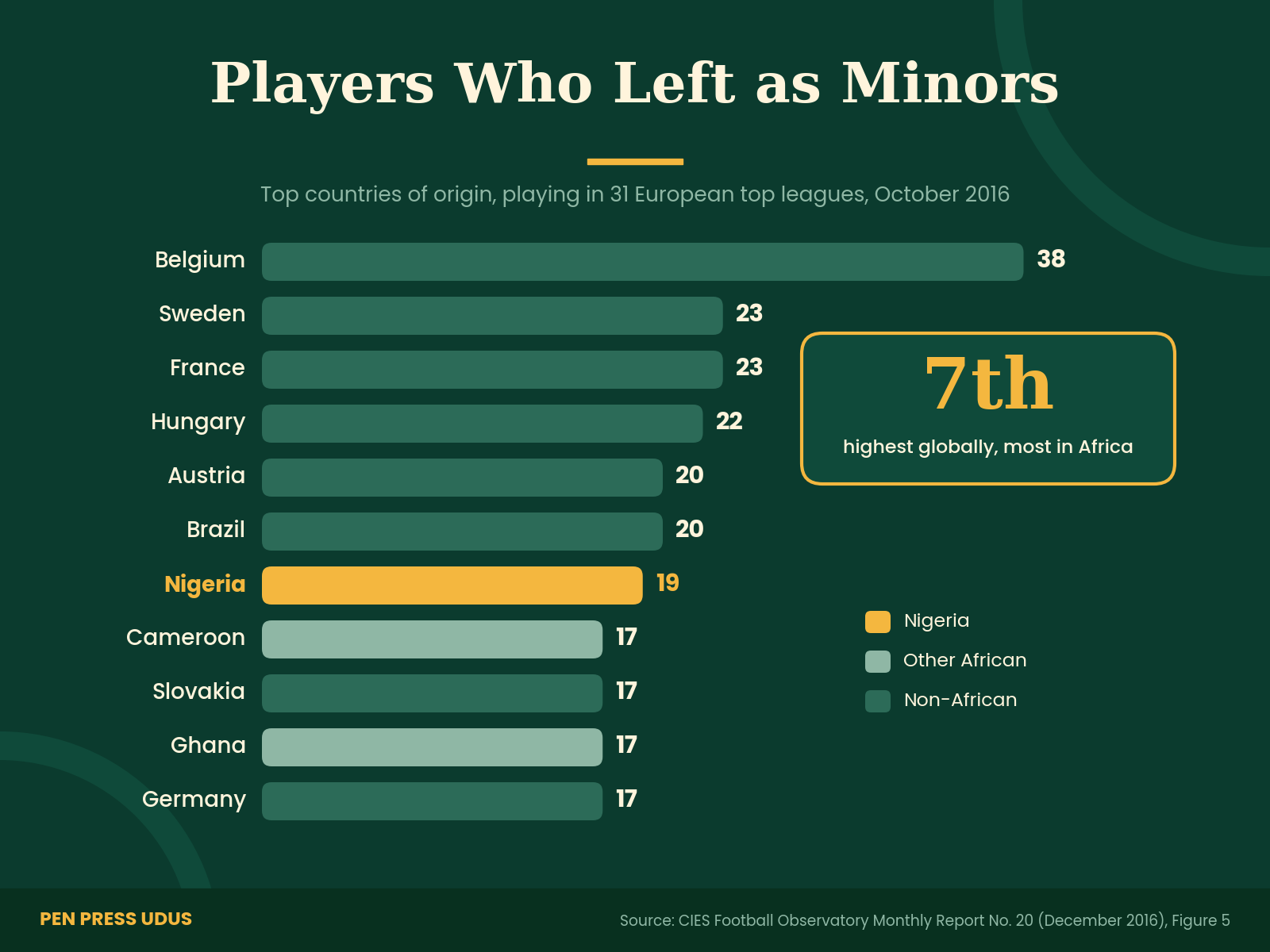
The pattern starts early. CIES Monthly Report 20 found that 19 Nigerian players who left the country as minors were playing in 31 European top-division leagues in October 2016, the most of any African country and the seventh highest globally. This shows that the trend did not start today.
Almost a decade later, CIES’s 100th Monthly Report ranked Nigeria eighth worldwide, with 926 expatriates between 2020 and 2025 alone.
The reason for this number is not far fetched, a player offered more money abroad has a clear financial reason to leave, because wages influence whether a player stays in a club’s plans through a season.
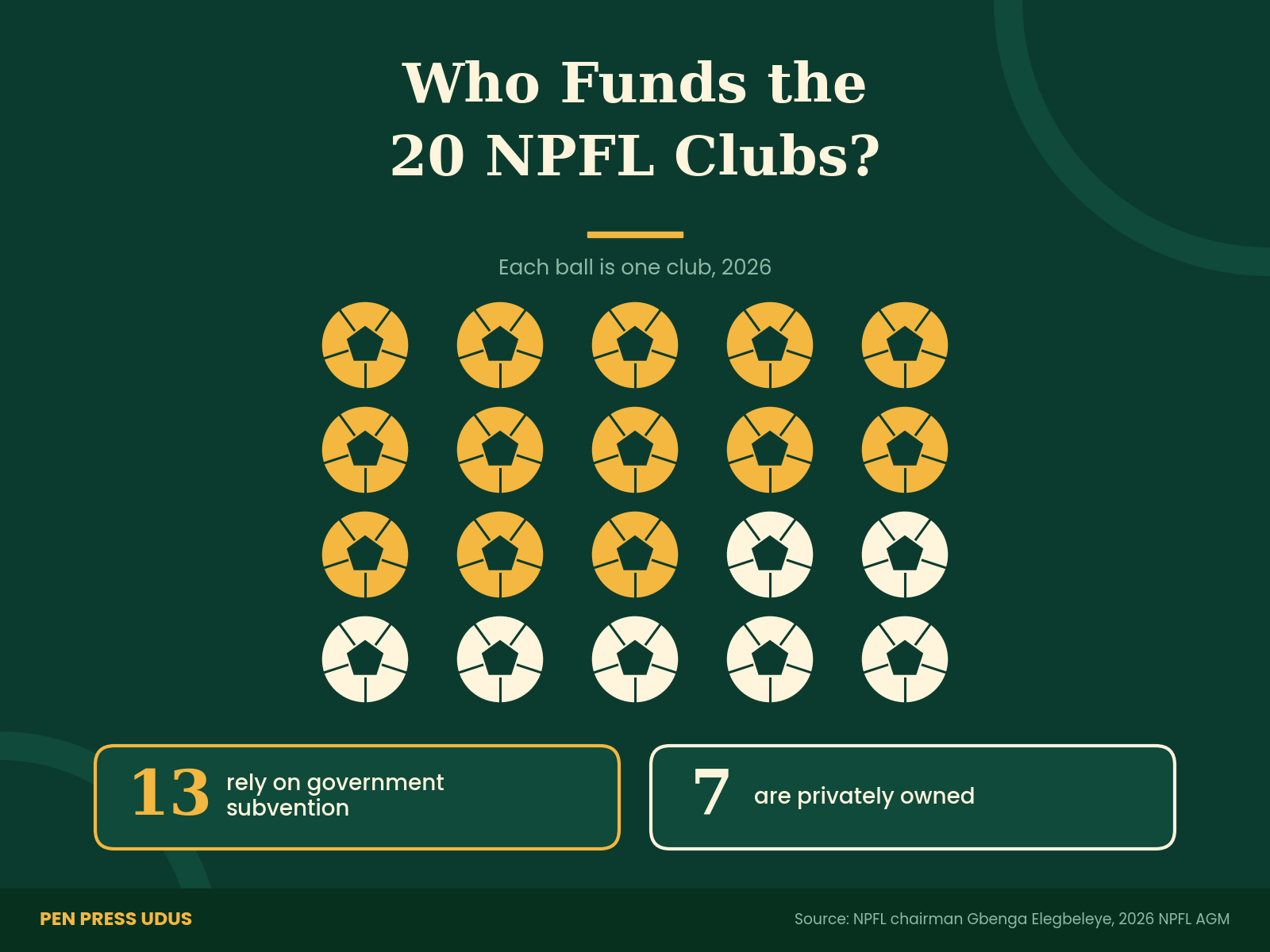
Mr Elegbeleye said only seven of the 20 NPFL clubs are privately owned and that 13 rely on government subvention, which he said makes a commercial model built on merchandising, ticketing, branding and private investment necessary. Clubs that depend on public money have limited room to raise wages unless their owners raise their budgets.
Wages and Salaries of the Average NPFL Player
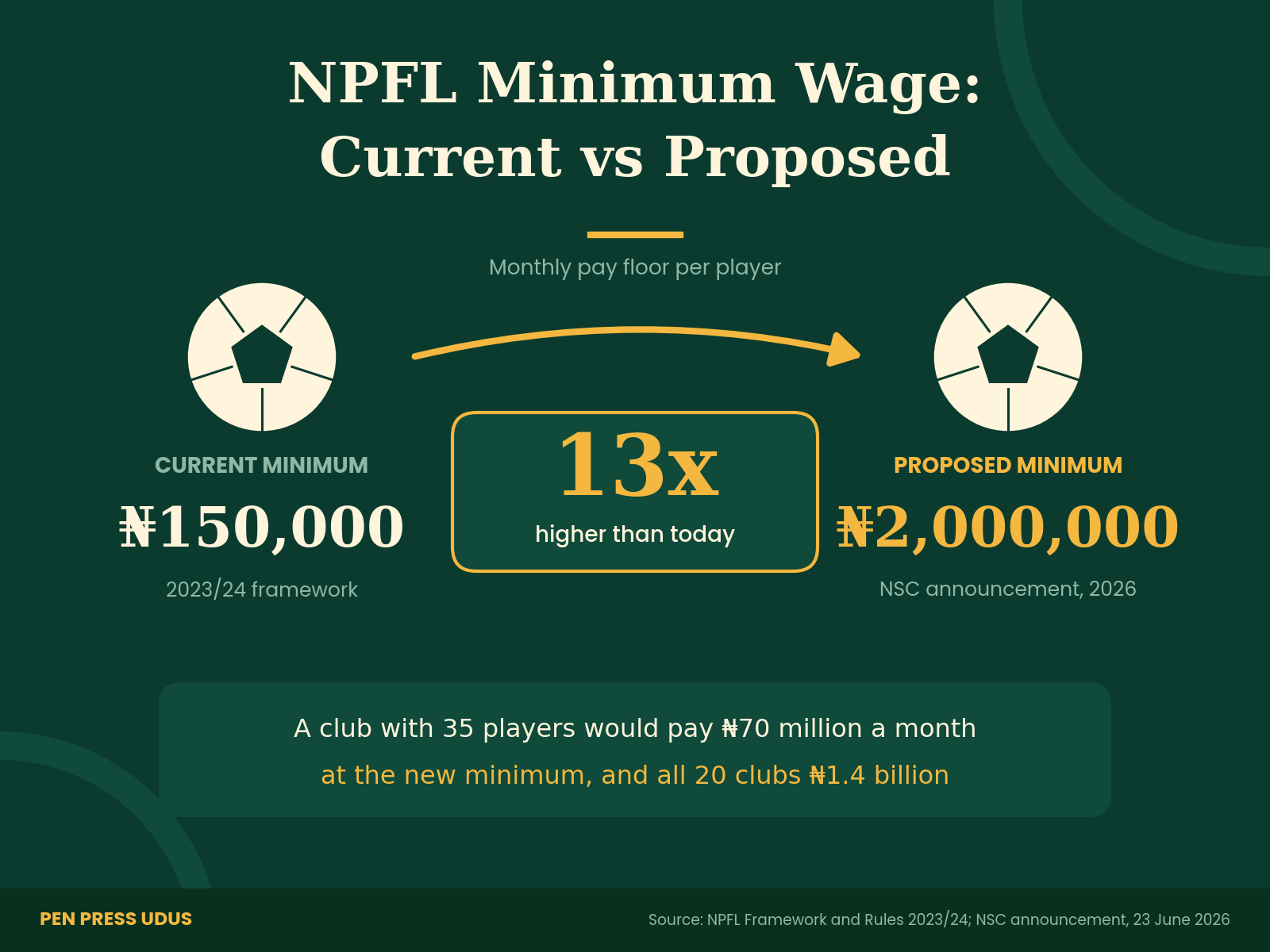
The NPFL Framework and Rules for the 2023/24 season set a minimum monthly wage of ₦150,000, payable to at least 25 of the 35 registered players per club but The Guardian reported that some players earn up to ₦1 million a month depending on their performance.
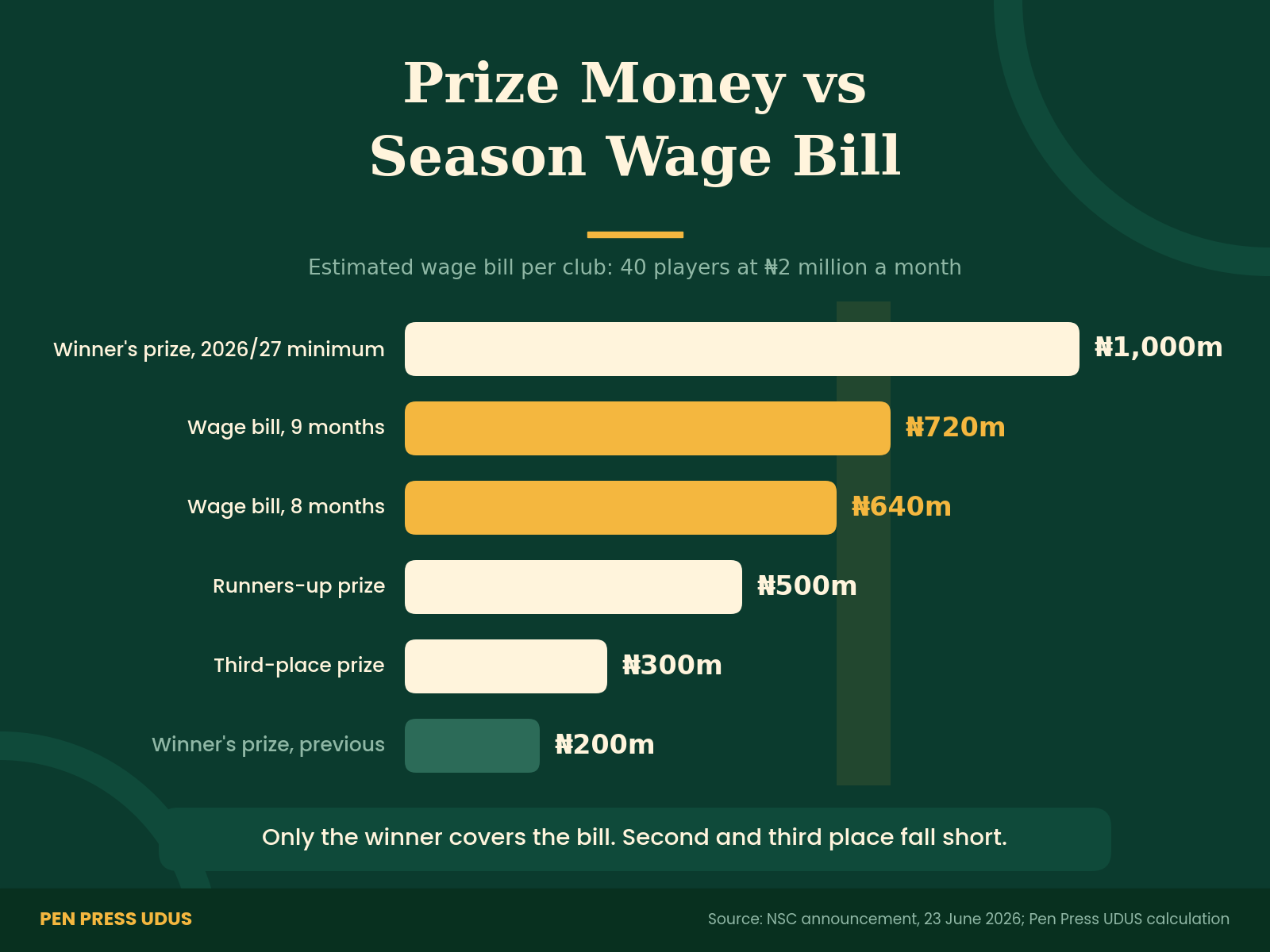
On 23 June 2026, after a meeting with the Nigeria Football Federation (NFF), National Sports Commission (NSC) chairman Shehu Dikko announced that the 2026/27 NPFL champions will receive a minimum prize of ₦1 billion, up from ₦200 million, and that stakeholders had agreed a ₦2 million minimum wage for players.
Mr Dikko said runners-up will receive ₦500 million and the third-placed team ₦300 million, “subject to official confirmation by league authorities.” He described the prize structure as part of efforts to improve the league’s commercial value, professionalism and competitiveness
The source of the funding of the proposed increase is unclear. Borno State Commissioner for Sports Sainna Buba called the ₦2 million wage unrealistic, saying most NPFL clubs rely heavily on government funding and lack the commercial capacity to pay it.
Stakeholders quoted by New Telegraph also asked where clubs would find the money. While experts cited in a Guardian investigation link weaker professionalism at state-owned clubs, including routinely breached contracts, to state ownership of most clubs.
Can State Governments Afford It?
The Guardian investigation reported that each of the 20 clubs spends between ₦230 million and ₦250 million per season. It also quoted former Dolphins FC media director China Acheru, who said the club’s annual budget was about ₦600 million in 2016, excluding continental and FA Cup engagements.
At the announced minimum of ₦2 million a month, a club with 35 players would pay ₦70 million a month, and all 20 clubs together would pay ₦1.4 billion a month. If a club registers 40 players and pays all of them the minimum, its monthly bill rises to ₦80 million. Over an eight- to nine-month season, that is ₦640 million to ₦720 million on wages alone, before staff pay, medical costs, feeding, transport and other expenses.
The ₦1 billion winner’s prize exceeds that wage estimate by ₦280 million to ₦360 million, but only one club wins it. The runners-up prize (₦500 million) and third-place prize (₦300 million) fall below even the lower wage estimate of ₦640 million and this estimation is without consideration for clubs that finishes lower.
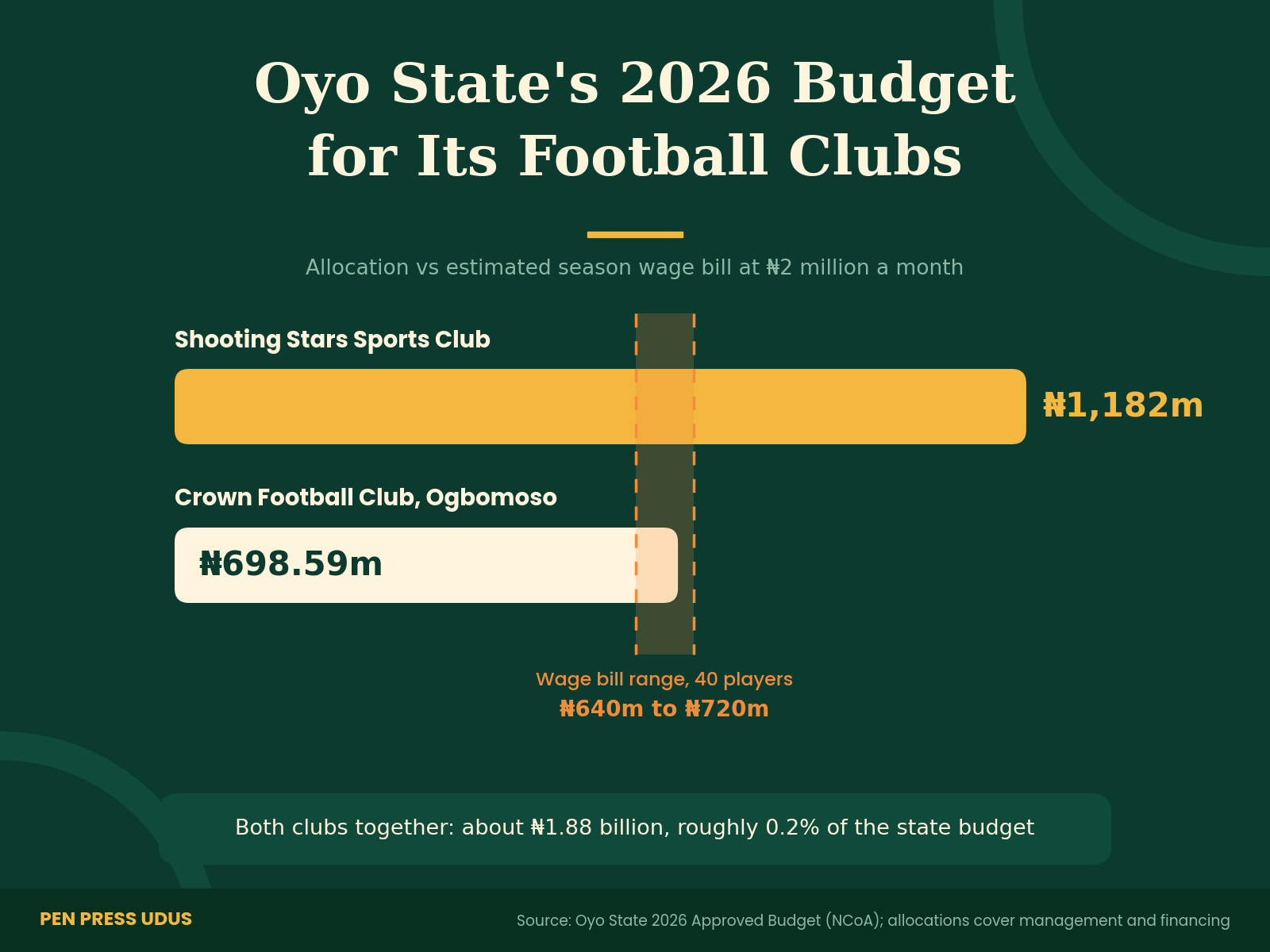
State budgets are difficult to assess. Oyo State allocated ₦1.182 billion to Shooting Stars Sports Club and ₦698.59 million to Crown Football Club, Ogbomoso, about ₦1.88 billion together, in its 2026 approved budget. That is about 0.2 per cent of the ₦892.09 billion the state’s Assembly passed, a total that later rose to ₦1.1 trillion after a ₦210 billion supplementary bill.
Shooting Stars’ allocation alone exceeds the ₦720 million wage estimate, though the budget line covers management and financing, not wages only. While the Crown’s ₦698.59 million would cover most of the estimate.
Lagos allocated about ₦44 billion to its recreation sector in its 2026 budget but no verified figure shows how much went to football. The state has never directly owned clubs, and allocations in most other states are difficult to establish.
State governments also carry heavy demands for basic services. BudgIT’s 2024 State of States report found that only Lagos and Rivers could cover their operating costs without allocations from the Federation Account. States that depend on those allocations may struggle to sustain football spending that does not bring direct financial returns.
Set against states’ finances and the past funding of their clubs, the announced wage and prize structure looks hard to implement under the current ownership and funding model.
What Should Be Done Instead?
A system in which clubs are privately owned but regulated by the government offers a more sustainable approach. Mr Elegbeleye has already said a commercial model is necessary for the league.
A Guardian report highlighted Remo Stars, owned by Kunle Soname; Doma United; and Sporting Lagos, managed by former NIM Football Club chairman Godwin Enakhena, for introducing sponsorship arrangements, season-ticket programmes and carnivals to raise revenue.
Private owners who expect a return on their investment have a reason to build revenue, which could fund higher wages and attract sponsors.
Former Super Eagles captain and head coach Sunday Oliseh reiterated that Nigeria’s best domestic players have left the league for better opportunities and higher wages abroad.
The NSC’s proposal raises the pay floor, but if clubs keep depending on state funding the policy may remain unfunded. Even at ₦2 million a month, the wages may not match what players earn in richer leagues.
Lawal Abiodun, president and head coach of Utility Sports FC, told Sport247 “We have to treat sports, especially football, as a business-oriented venture and not child’s play. Football is a multibillion-dollar business globally, but Nigeria has yet to maximise its enormous potential.”
Government Intervention
Private ownership does not mean transferring clubs to individuals without oversight because some privately owned clubs were set up for purposes other than football and were abandoned once those aims were met.
To prevent that, the government should set clear rules on transfers of ownership, financial accountability and long-term management, and require prospective owners to show the financial capacity to run a club.
The NSC has already said it will enforce club licensing requirements strictly, even if fewer clubs qualify at first, which could serve as the base for such rules.
Safeguards of this kind would protect players, staff and supporters while encouraging private investment, and would let state-owned clubs move to private ownership under supervision.
The announced reforms raise the pay floor and the prize money, but the figures above show a gap between those commitments and what state-funded clubs can pay.
Restructuring ownership, financing and management could close that gap and give the NPFL a better chance of keeping its young players.