


By: Musa Ameerah Abdullahi
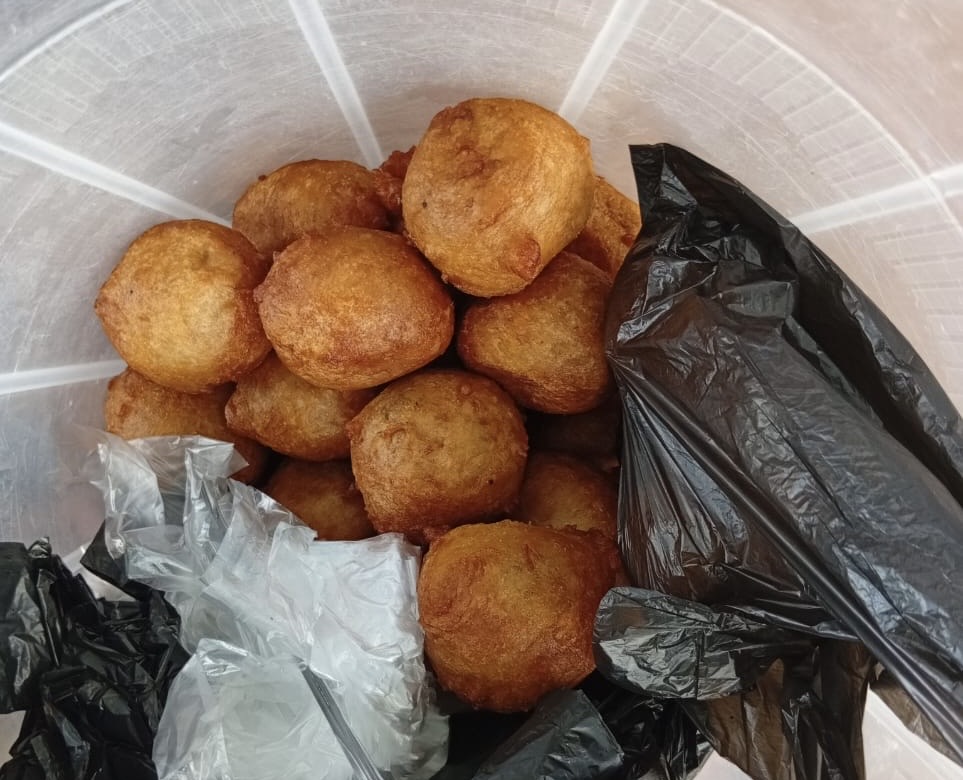
At dawn, while the rest of the university community sleeps, Hamid Alhassan is awake, frying puff puff. He does this every day from 4:00am until 8:00am, when lectures begin. Those lectures often run until 6:00pm, leaving him little to no time to rest.
“I am always tired, struggling to keep up with academic activities, missing morning classes, performing poorly in tests, and going late to hospital postings,” he recalled.
Alhassan, a recent graduate of Medical Laboratory Science (MLS) at Usmanu Danfodiyo University Sokoto (UDUS), sold puff puff to pay for his undergraduate education because he had little parental support.
The Price Paid for Survival
Alhassan was 19 when he secured admission to study chemistry before moving to MLS. He told Pen Press UDUS he found relying on other people’s help risky and saw his school fees, food, clothing, accommodation and learning materials as his own responsibility.
“In fact, during holidays, I engage in every form of work available as long as it’s legal and fetch me some money,” he said. But those earnings went into earlier academic expenses, which often left him broke barely halfway into the semester. After a period of indecision, he decided to give selling puff puff a chance.
He borrowed ₦10,000 from a cousin, who later waived repayment, to start the business. He kept investing his gains and the gifts he received from friends into it until he graduated.
He advised students in the same position not to lose focus when obstacles come, saying that the reason they started and their equal commitment to their studies will keep them going.
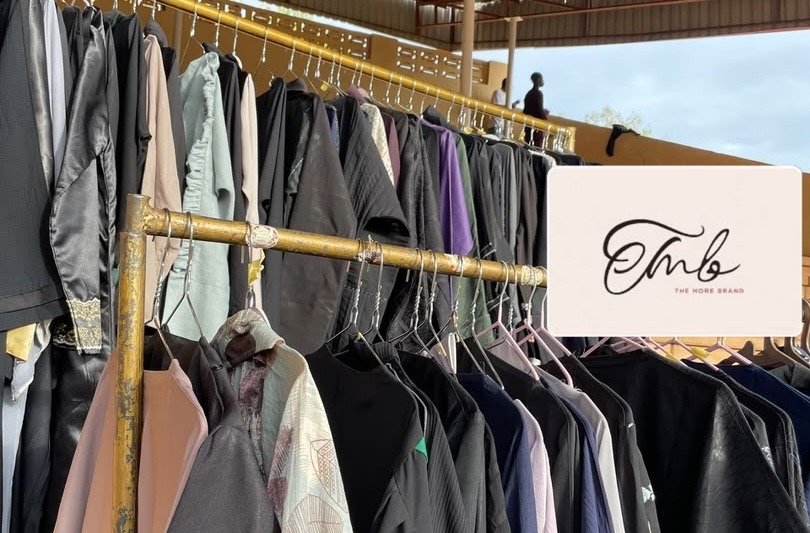
Balogun Aminat Boluwatife, a graduate of Agricultural Economics of UDUS, started The More Brand (TMB), dealing in fairly used abayas, with a ₦45,000 loan while in school.
Starting the business was Aminat’s way of fending for herself. She began with chin chin before moving into fashion, where her interest lies.
Aminat said balancing academics and business was her biggest challenge. Unexpected results nearly broke her, she said, especially when she had put in so much effort and had not expected them.
“One legacy I lived by is that giving up is not an option for me,” she said, adding that she had to manage her studies alongside the business to strike a balance.
She advised new students who want to go into business to be upfront about what they want and to stay committed within their means.
Selling Today to Study Tomorrow
When lectures end, Saadu Ibrahim, a 200-level Agriculture student at UDUS, rushes to his room at the Jubril Aminu school hostel, but not to sleep. At the mini market, he swiftly sets up his table and assembles his containers of fruit salad, hoping for students’ patronage.
“If I don’t do this I won’t be at 200 Level today,” Saadu said. His parents are farmers who struggle to cater for themselves and their children, he told Pen Press UDUS, and the only way he can help himself is to find something that earns him some money.
“For now this is what I sell today, so I can study tomorrow,” he said.
He said the business has taught him more about marketing and accounting than he expected from any textbook. “After NYSC I want to open my own fruit salad super market,” he said.

These students are part of a wider group: The Garage’s 2026 State of Student Work survey found that 42 per cent of student workers contribute financially to their families.
When Passion Meets Academic Pursuit
Abdullahi Ahmad, a 400-level medical student, started his brand, popularly known as “Pen Seller”, with ₦7,000 saved from his monthly allowances. Unlike Alhassan and Aminat, he said passion, not his bills, led him into business after advice from his General Studies (GST) lecturer.
As class representative, he carries his colleagues’ concerns as well as his own academic and business demands. He discloses that balancing academic excellence, leadership and business was difficult
“I manage to attend lectures and make sure to never miss a test or exam even though I still have a business to manage,” he said. He advised students who want to go into business to learn the trade, have the passion and find a mentor to guide them.

Ibraheem Suaibat Subuola, a 500-level Agricultural Economics student who runs Aniberry’s Treats, said Nigeria’s uncertain economic outlook is one of the reasons students turn to entrepreneurship, which many first rely on as an immediate survival scheme while in school. She said some students go into business out of passion, and that it helps them become independent, meet their needs, build networks and win regular customers.
On how business affects academics, she said: “It can affect academics in either way. Students just have to study themselves, know what work means and avoid letting one affect the other.” From her own experience, she said, balancing the two threatens performance, and she advised students to manage their time and focus on what matters.
What the Numbers Say
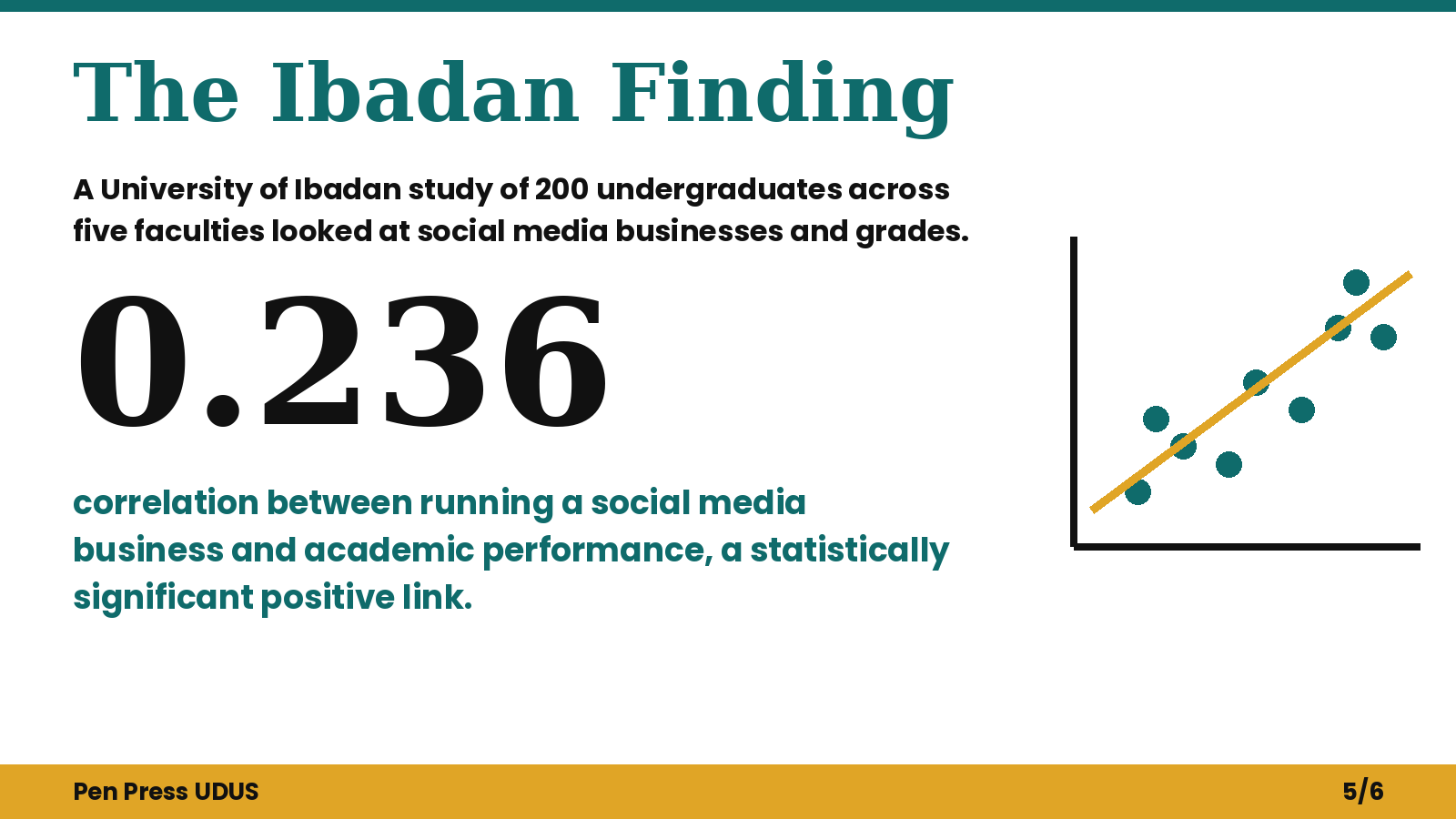
A University of Ibadan study of 200 undergraduates across five faculties found a statistically significant positive association between running a business on social media and academic performance, with a correlation coefficient of 0.236. The researchers also called for targeted support to help students balance business and academics. Add authors and year.
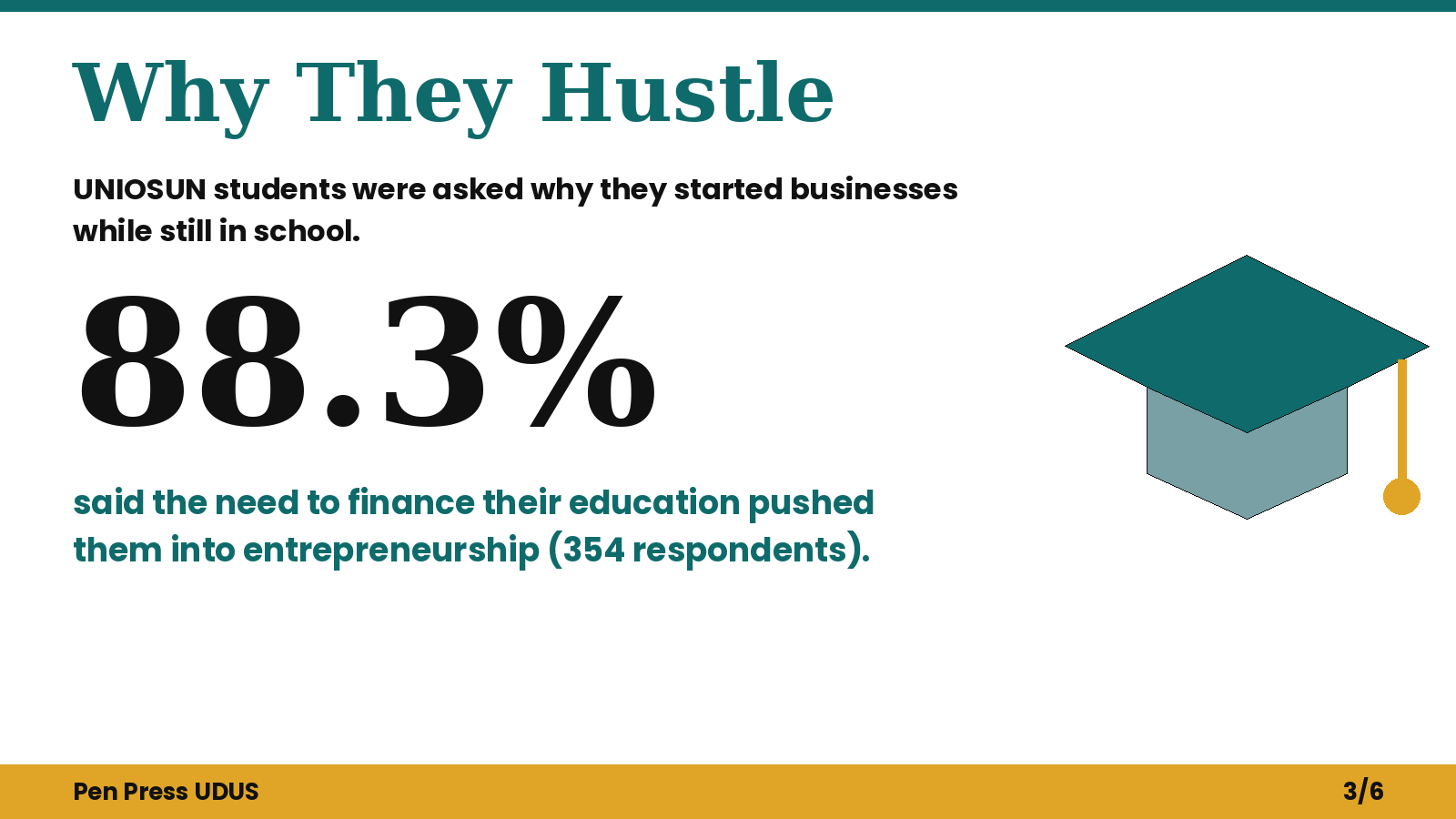
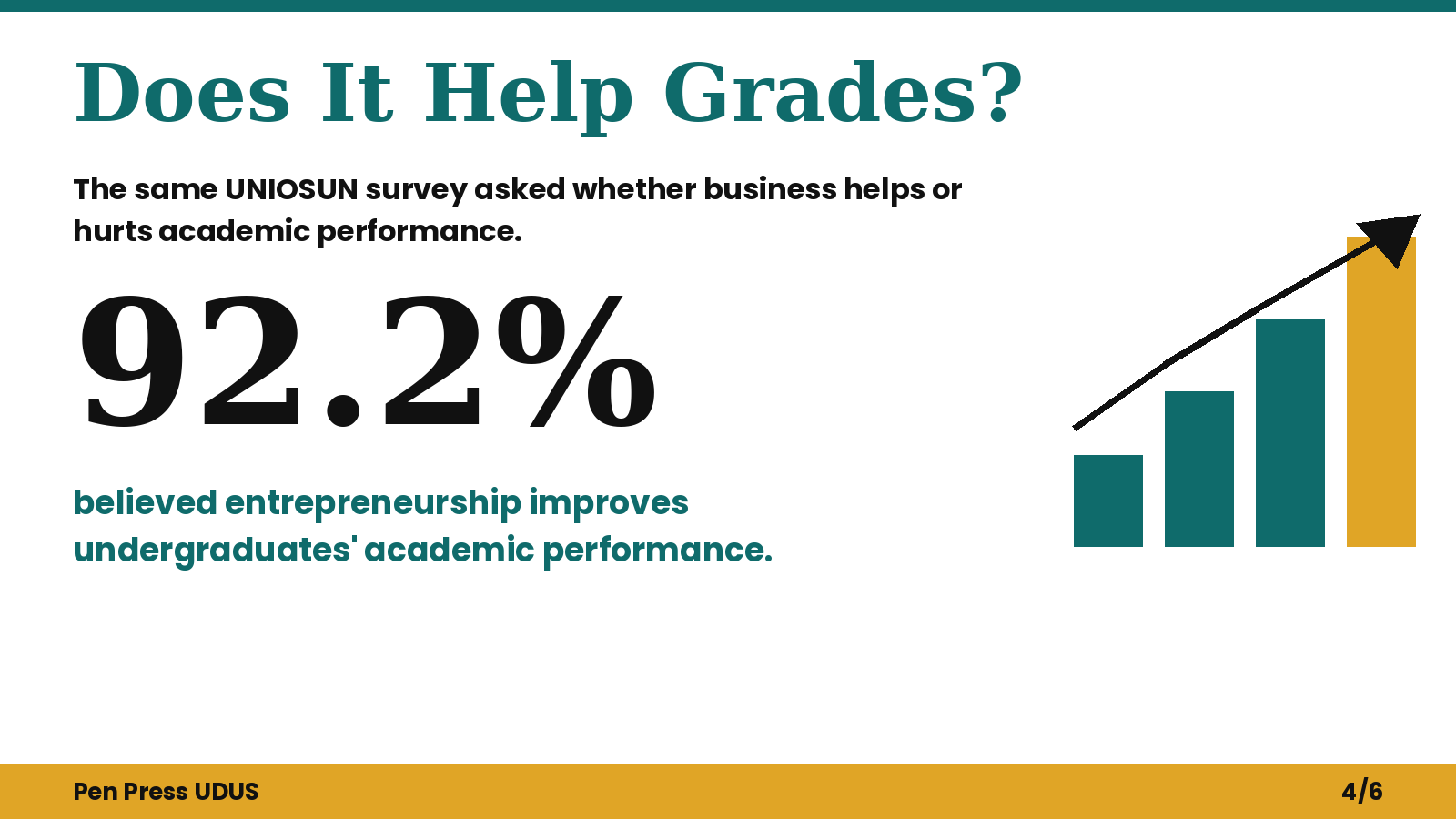
A study at Osun State University (UNIOSUN), Osogbo, surveyed 354 respondents drawn from a population of about 12,000 undergraduates. It found that 88.3 per cent said the need to finance their education pushed them into entrepreneurship while in school, and 92.2 per cent believed entrepreneurship improves undergraduates’ academic performance.
Experts Weigh In
Dr Bello Audu, an innovation economist, told Pen Press UDUS that time is the central constraint for student entrepreneurs. Time spent studying cannot also be used to run a business, he said, so students must plan around their academic timetables and put lectures and examinations first. He said limited time, money and labour also stop students from expanding their businesses while still in school.
Dr Audu called for practical entrepreneurship education in universities and for government-backed funding schemes, run through universities, that would give loans to students who want to start or expand businesses. He said students who manage such funds responsibly and maintain satisfactory academic performance could qualify for grants after graduation. He also recommended that universities provide spaces where student entrepreneurs can operate, receive training and access business guidance.