

By Abdulazeez Rofiat
A Road Students Can’t Avoid
Umar Maryam, a 500-level Law student at Usmanu Danfodiyo University, Sokoto, sighs for the tenth time as the bus jars to a halt at yet another pothole. She is now 15 hours into a journey that should ordinarily take 12, and they aren’t even halfway through the most stressful stretch of the trip: Niger State’s roads.
Maryam’s frustration is not unfounded. Reports indicate that roughly 80 percent, about 1,115 of the state’s 1,437 kilometres of federal roads spread across 15 of Niger State’s 25 local government areas, are in a state of disrepair. For students travelling between North-Central Nigeria and communities in the Northwest, this road is often unavoidable.
For UDUS students specifically, completing examinations should bring relief and excitement as they look forward to spending their holidays with family. Instead, the journey home has become a difficult and risky experience.
The Human Cost
As Maryam hunkered down in her seat for comfort, she reminisced on how much she had looked forward to a trip that had since become a nightmare. The situation was especially unbearable, she said, because she hadn’t prepared for it: two academic sessions without travelling home had made her momentarily forget how bad the road could be. Having also monitored insecurity trends across Northern Nigeria for her work, she said the things she encounters daily left her uneasy well before she set out.
“I was only worried about insecurity, majorly because I’ve been monitoring insecurity in Northern Nigeria for work for a while now, and the things I see every day scare me. But I’ve not been home in two years, so I did the best I could,” she said.
She and her friends opted for a 9-seater Sharon bus instead of an 18-passenger bus, believing it would be faster and safer. “Lo and behold, it was the worst trip of my life,” she laments.
The journey was going smoothly, she said, until they reached Niger State. The road was already bumpy but manageable, until it began to rain. “We waited for a few hours and resumed the journey. But it became hellish,” Maryam told Pen Press.
“The roads were horribly bad, and the rain made it worse. Our car was just sinking in the water.”
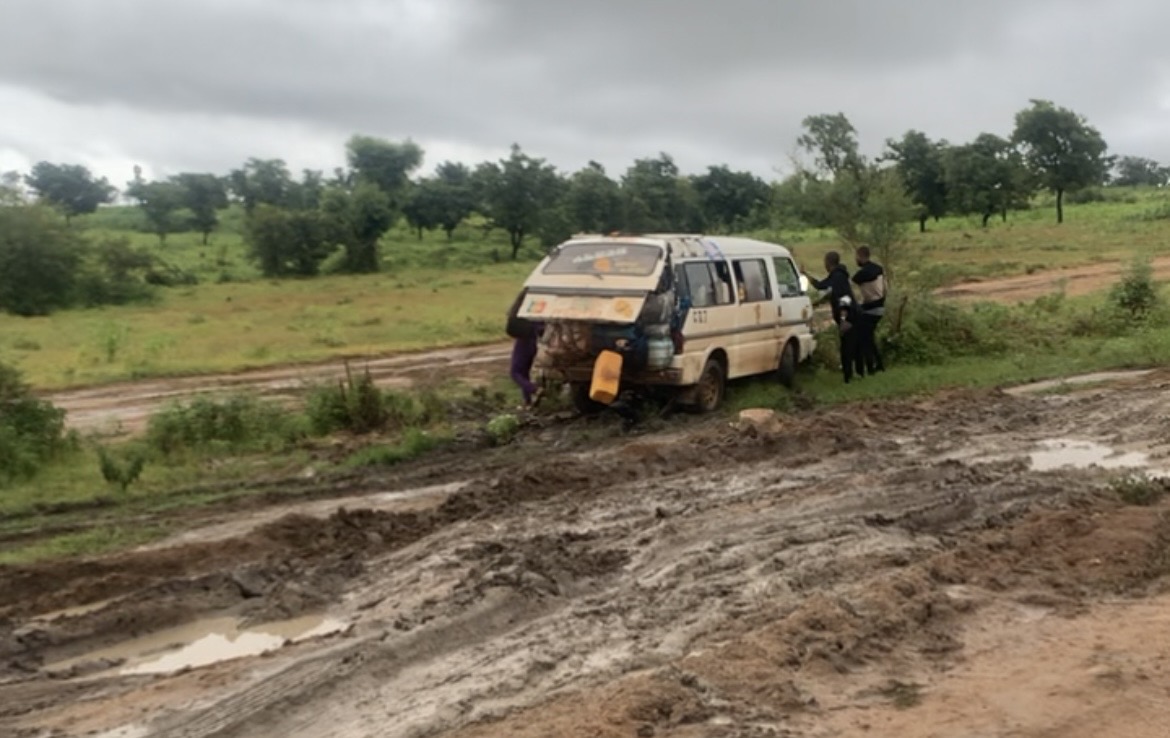
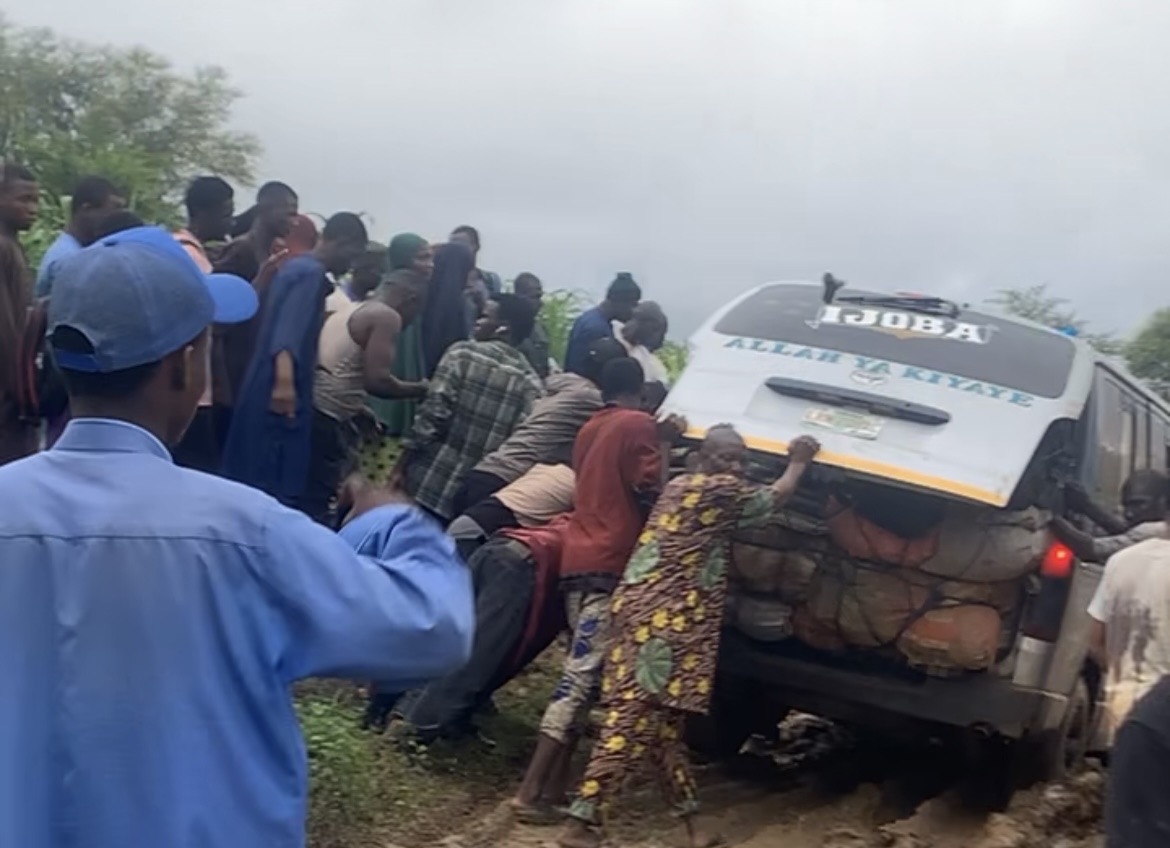
She added that the male passengers had to push the car out of the water at least five times, each attempt costing no less than 15 minutes. The group was also forced onto a longer route after sections of the original road became completely unusable. What was supposed to be a 12-hour trip stretched past 24, partly because they also stopped to help push other stranded buses that weren’t even part of their convoy.
The fear of insecurity followed her the entire way. “Imagine your bus stopping in the middle of nowhere in Niger State when you’ve just read on the news that bandits attacked, killed, and kidnapped people in the same state the night before. Of course, I was scared for my life,” she said.
Yusuf Olatunji, a 400-level student of Library and Information Science of the same school, faced a similar ordeal. He said the bad road condition made his journey home difficult and stressful, with potholes and rough patches stretching across long portions of the route, forcing his driver to slow down considerably to avoid damaging the vehicle and further extending an already long trip.
Behind the Damage: What’s Actually Wrong With the Road
The deterioration students describe isn’t just weather-related bad luck. For civil engineer Ammar Bello, who specializes in infrastructure design and management, the failure students describe goes far deeper than underfunding or bad weather. In an interview with Vanguard, Bello argued that northern Nigeria’s road crisis is rooted in how the roads are designed and built in the first place, not merely in how poorly they are maintained afterwards.
“We are not just facing potholes, we are witnessing accelerated structural failure,” Bello said. “From pavement fatigue to drainage collapse, the early-stage design errors and material inconsistencies are now manifesting in dangerous ways.”
Having analysed field data across Northwestern corridors, Bello identified three factors as the most critical determinants of how long a road lasts: the durability of materials used, the efficiency of its drainage system, and the quality of construction workmanship. In regions with heavy axle loads and extreme weather variation, conditions that describe much of the route linking Niger State to its neighbours, he said failing to use weather-adaptive materials or adequate sub-base reinforcement amounts to negligence.
“When asphalt integrity drops below load-bearing thresholds, roads buckle under climatic and vehicular stress,” he explained.
The consequences, Bello noted, extend well beyond discomfort. Deficiencies in design and construction are directly correlated with elevated accident rates, more severe injuries, and long-term economic losses from vehicle damage and traffic delays — costs borne disproportionately by commuters like the students navigating the corridor each term.
The Federal Roads Maintenance Agency (FERMA) told the National Assembly in February 2026 that inadequate funding remains its primary constraint in maintaining federal roads nationwide, despite reporting that it patched over 31,500 square metres of potholes and made more than 1,655 kilometres of road motorable in 2025 alone. The agency proposed a ₦229.99 billion budget for 2026, an acknowledgment, in effect, of how far current resources fall short of the damage spread across federal roads like the one connecting Niger State to its neighbours.
A Pattern Beyond Niger State
Maryam and Yusuf’s accounts reflect a broader pattern. Niger State’s Ministry of Works and Infrastructural Development has publicly described the state’s road network as facing a “transportation emergency,” telling the National Council of Works in late 2025 that both federal and state roads in the area have deteriorated to the point of disrupting supply chains and increasing accidents. Sections of roads linking Niger State to neighbouring states, including the Bida-Lapai corridor, have reportedly left motorists stranded for days at a time.
Hameedat Olamide Olarewaju, a 200-level student of Mass Communication, described her own journey to Pen Press UDUS as stressful and dangerous. “The condition of the road has made travelling home so stressful and dangerous. We sometimes spend a long time on the road because buses find it difficult to pass,” she said.
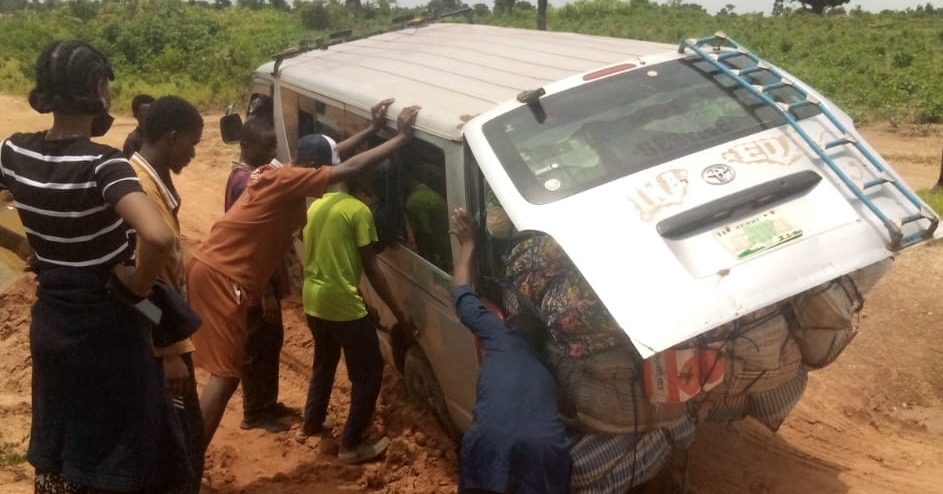
Hameedah’s bus being pushed out of the pit. Photo credit : Pen Press UDUS
The insecurity dimension is just as well documented. A nationwide analysis of highway kidnappings found that more than 7,700 people were abducted along ten of Nigeria’s major highways between 2019 and 2026, with the Northwest and North-Central corridors, the same general region Niger State sits within, accounting for most of the risk.
Just months before Hameedah’s journey, gunmen abducted several travellers along a highway in Kwara State, with ransom demands running into hundreds of millions of naira, underscoring that the danger students describe on these routes is neither isolated nor imagined.
For students travelling to Kwara State, the journey can normally take about 19 to 20 hours when there are no major delays or vehicle problems. Students say poor roads and other challenges can significantly increase travel time, with some journeys stretching into several days before they finally reach home.
What Needs to Change
The prolonged journeys expose students to fatigue and uncertainty, while delays on isolated roads increase their vulnerability to security threats. As the situation persists, students continue to face uncertainty and danger travelling through Niger State on their way home.
The growing concerns over road conditions highlight the urgent need for government and relevant authorities to take immediate action. Repairing the roads, and closing the funding gap agencies like FERMA say is holding that work back, would help prevent avoidable accidents, ease transportation difficulties, and ensure students can return home safely.