

By Shero Abbas
For students of Usmanu Danfodiyo University, Sokoto (UDUS) living in private hostels, electricity is not just about comfort; it is about dignity, safety, and the right to a conducive learning environment. Yet, for over a year, a prolonged power outages have become a painful routine, disrupting their academic activities, finances, and overall well-being.
On what should have been an ordinary evening in “Shama”, a private residential area around Usmanu Danfodiyo University, Sokoto (UDUS), the atmosphere was tense and unsettling. Students moved around with phone torches, some preparing for night classes in darkness, others struggling to complete the most basic daily activities. The absence of a stable power supply has reshaped students’ daily lives, forcing them into difficult choices and exposing them to avoidable risks.
For Usman Daminola, a 300-level Business Administration student, the frustration has reached a breaking point. He recalls vividly when the problem began.
“The power transformer developed a fault in the second week of Ramadan last year. We believed that by now everything would have been fixed, but instead, the same problem keeps repeating itself,” Daminola said bitterly.
According to him, students were initially assured that repairs would be carried out swiftly. Months later, nothing has changed. Darkness remains a constant companion, and hope continues to fade.
He emphasized that electricity is not optional for students like him but important.
“As a student, electricity light is very important. In my department, the dress code is mandatory, and one can’t wear it without ironing. Anytime we want to press iron the clothes, we have to trek all the way back to school or look for places with electricity. This is not how students are supposed to live,” he said.
He added that what makes the situation more painful is the uncertainty, students do not know who to hold responsible or when the problem will finally be resolved.
Financial Burden And Daily Survival
Beyond academics, the lack of electricity has created serious financial strain. Students who once depended on electric appliances have been forced to find alternative, and often more expensive — means of survival.
Ahmad Ahmad, a 300-level Agriculture student, described how the outage has affected him both financially and physically.
“I bought a hot plate in my 100-level, and it made my daily routine easier for me. Cooking was faster, cheaper, and less stressful. But now there is no light. The hot plate is there, yet I have to buy charcoal every day just to cook,” he explained.
He related that the daily cost of charcoal may seem small, but when added up over weeks and months, it becomes a heavy burden for students already struggling with tuition, accommodation, and feeding.
“It’s not just the money. It’s also the time and stress. You come back tired from lectures and still have to struggle to cook because there’s no electricity,” he added.
Many students share similar experiences, resorting to gas cookers or charcoal despite the rising cost of fuel. For those who cannot afford these alternatives, skipping meals or relying on roadside food vendors has become common.
Darkness That Drives Students Away
For some students, the absence of electricity has made hostels nearly inhabitable at night.
Abubakar Sheu Ibrahim, a 200-level student of Information and Communication Technology, said the blackout has chased him out of his hostel entirely.
“There is no convenience in reading at my hostel. I need to charge my gadgets for study, communication, and safety. Without light, I’m forced to stay in lecture hall most nights,”he said.
Abubakar recalled a troubling incident from the previous academic session that highlights the risks students face.
“Because there was no light in my hostel, I went to the academic mosque to charge my phone and power bank. That was where they got stolen. If there had been light in my hostel, I would have left my devices there,” he recounted.
He described the incident as a painful lesson, one that left him financially strained and emotionally shaken.
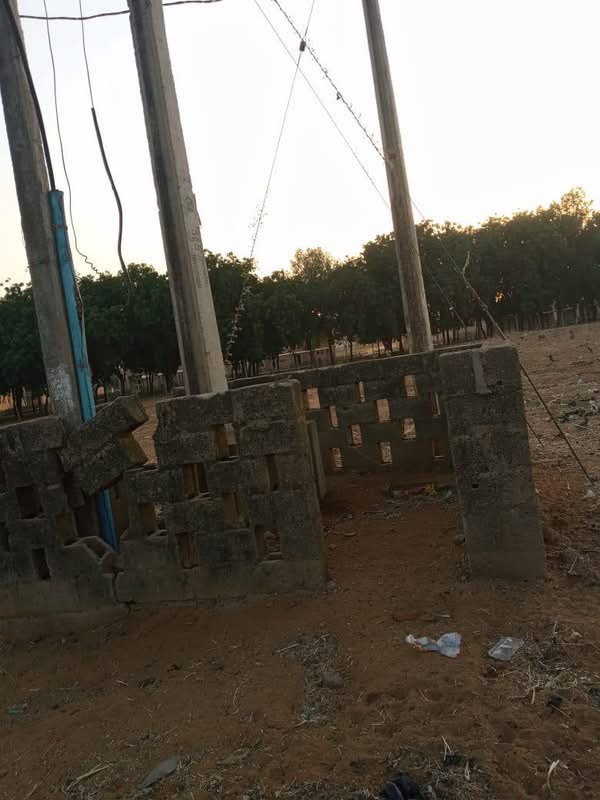
Abubakar further alleged that the transformer serving the area has been repeatedly taken away under the excuse of repairs.
“Last session, they said the power transformer was to be fixed and would be returned in two weeks. It was only after we went on holiday that they brought it back. Now the same thing is happening again,” he said.
Hostels Versus Classrooms
Before the blackout, Abubakar said his hostel was the ideal place to study.
“I could read peacefully in my room, free from mosquitoes, noise, and distractions. But without light, I’m forced to attend night classes just to have electricity,” he explained.
Like many students, Abubakar relies heavily on his phone for academic materials, online resources, and communication.
“I can’t do anything without my phone, and my phone must be charged. That’s one of the main reasons I go to classes at night,” he said.
The constant movement between hostels and classrooms at late hours in the night has also raised concerns about safety, especially for students who must walk long distances in the dark.
Fresh Student, Fresh Shock
For new students, the reality of life in private hostels has been particularly shocking.
Mustapha Aliyu, a 100-level student of Microbiology, bemoned on the situation that fallen far below his expectations.
“This was not what I imagined. I thought there would be constant light and a conducive environment to read.
“Instead, for the past two months, I’ve spent a lot of money just charging my gadgets,” he said.
Unlike students who are used to navigating the system, Mustapha said he feels uncomfortable charging his devices in classrooms.
“I don’t like going to classes to charge my gadgets because I don’t know what might happen there. That’s why I rely on charging stations, but the cost is very high and difficult to cope with,” he explained.
For him, the blackout has not only affected his finances but also his sense of security and focus as a new undergraduate trying to adjust to campus life.
A call to Landlords: “We Are Tired Of Blackout”
Many students believe the responsibility for resolving the crisis lies squarely with landlords and property managers.
Ahmad Ahmad urged them to take urgent action to restore the light.
“Light is the most crucial thing for students. Everything we do depends on a stable power supply, reading, cooking, charging our phones, even resting properly,” he said.
He noted that after the installation of a new power transformer at the end of the last academic session, nearby villagers now enjoy electricity, while students in private hostels remain in darkness.
“The villagers are enjoying light, but we are left struggling. We are appealing to the landlords to take the necessary steps and restore electricity for the benefit of all students,” Ahmad said.
Hostels Agent Responds
Speaking with Pen Press, Mr. Baba Sani who happens to manage some of the hostels in “Shama” has also expressed his distress on the issue of disruptive power supply within those areas for the past one year.
“We believe that some of the students don’t have lights in their hostels, and we’ve trying our best to ensure they restore the light within three weeks, before Ramadan,”he said.i
“And besides, I don’t think having no light in their hostel is our fault, because during the previous session, the power transformer had collapsed for almost three times and before it was restored was after examinations, when students went back home, but now, we’ve been putting our best to ensure students enjoy the light”, he add.