
By Zainab Ismail Ajoke
Being told by her brother about an incident of a ghost writer who wrote an article titled SAVE-UDUS in 2019 and shared by numerous students on campus, which led to the threat of withdrawal on many campus journalists by the UDUS management, the passion for writing remains firm, but still engrossed with the fear of intimidation or studentship jeopardy if she tells what the school management wants hidden.
This was the story of Yusroh Omowunmi, a 100-level student of Mass Communication at Usmanu Danfodiyo University, Sokoto who is passionate about journalism but doesn’t know how to manage the ethics of good journalism without jeopardising her academic journey.
“I am always scared of losing my studentship whenever I want to write about pressing issues on campus, so I use my diary instead,” she said.
On Thursday, May 19th 2026, the Centre for Journalism Innovation and Development (CJID) wrapped up its three-day journalism training for campus journalists and Mass Communication students at Usmanu Danfodiyo University, Sokoto (UDUS) which tackled the earlier anxiety that filled Yusroh’s heart, it equipped her and many other students with same fear, with the necessary tools to navigate their journalism ways and strike balance between telling good stories on campus and their academic journey.
About CJID
The Centre for Journalism Innovation and Development (CJID) is a pan-African media development think tank advancing investigative journalism, fact-checking, human rights reporting, media innovation, elections, and journalists safety. It was founded in 2014 to strengthen West Africa’s Journalism sector to promote democratic accountability in the service of inclusive and sustainable development.
Through initiatives like the Media Freedom Project, CJID uses research, advocacy, coalition-building, monitoring, and strategic litigation to foster open civic spaces and strengthen democratic accountability across the continent.
Also, CJID spreads its Media Literacy advocacy to campuses and strengthens the power of investigative reporting among campus journalists while providing them with essential tools and skills to promote accountability and curtail the spread of information disorder in their immediate environment.
UDUS Campus Journalism Clinic
The three-day campus clinic training, held at the Centre for Advanced Science Research, Usmanu Danfodiyo University, Sokoto from Tuesday May 19th to Thursday May 21st 2026, focused on equipping participants with skills in evidence-based reporting, accountability journalism, fact-checking and news editing.
The Managing Editor, Premium Times, Mr. Idris Akinbajo discussed Journalism Ethics and the Essentials of News Reporting Ethics, where participants were taken through the foundational principles guiding responsible and credible journalism practice. He also focused on news reporting principles, News values. The Society of Professional Journalists (SPJ) Code of Ethics, Ethical violations, and the benefit of practicing good journalism.
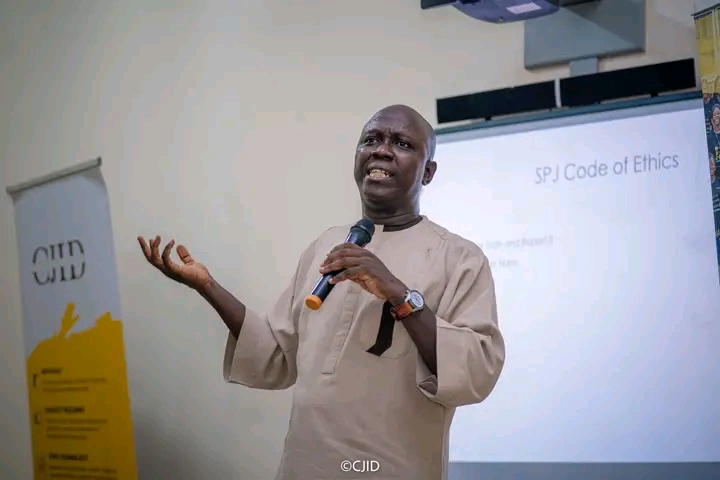
Mr. Idris further introduced participants to practical tools and strategies for uncovering public interest stories where he discussed the reason for being a Journalist, roles to investigate. He aligned Investigative Journalism, its essential elements, the importance, and how to get story ideas, to develop the story plan, and the road map as well as sources categorisation.
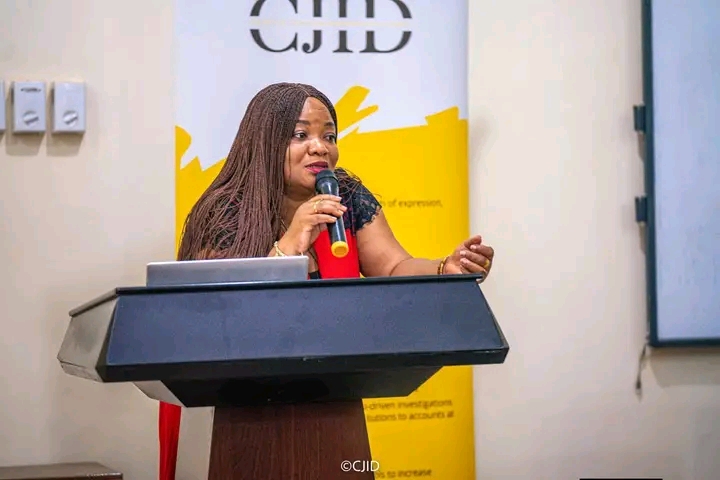
The Deputy Director, Journalism Program, CJID, Mrs. Busola Ajibola also guided participants on the importance of inclusive reporting. She explained how to give equal attention to all members of society, especially people whose voices are often ignored or underrepresented such as women, young people dropping out of school. She also stressed on the need for journalists to center marginalized voices in accountability journalism so that stories can reflect the real experiences and challenges faced by ordinary people.
The last day of the three-day training began with Lateef Sanni, the communication officer for Dubawa who presented the topic titled “Understanding Disinformation and How Bad Actors Work.”
The session laid a background on information disorder, why it happens, systemic consequences, why it spreads fast, how bad the actors work, red flags to look out for, how to verify information and the verification toolkits available to utilize.
The session was followed by a panel session titled, “Verification, Fact-checking, and Responsible Content Sharing”, moderated by Mrs. Temilade Omilende, the program manager of Dubawa where Students’ leaders shared how they have worked in their respective communities to ensure that accurate and right information is dished out, while also airing their experiences with inaccurate information and how they handled the situations.
Subsequently, Mr. Silas Jonathan, the programme manager for DAIDAC at CJID took the participants on a technical journey session on verification and responsible content sharing. He guided participants on media and information literacy (MIL) which he defined as the skillset to access things as they are.
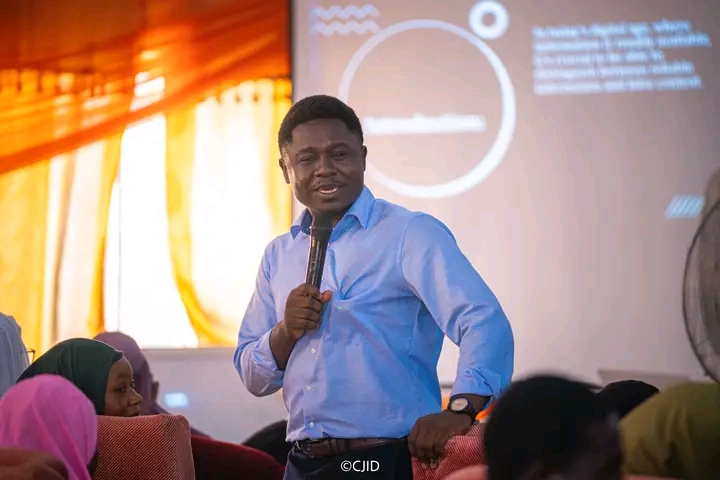
He began by establishing how it’s very crucial to possess skills used in distinguishing reliable information from false contents. He explained misinformation as false but not intentional information, disinformation as false information published deliberately, while malinformation as real but harmful information that is taken out of context.
According to him, contexts of information disorder can come in Heath, political, ethno religious, social economy and gender based violence contexts. He explained the typology of information disorder on social media during elections, which include, the ones taken out of original context, ones partially altered or doctored, and the ones that are forged or fabricated.
The facilitator further created six (6) groups of participants charged to engage in spotting fake challenges, where participants were asked to look out for narratives pushed in pictures, foresee potential impacts, and suggest appropriate solutions to counter each narrative.
The New Narratives
From the first day of the CJID training, Yusroh had developed interest in joining one of the campus media outlets where the new skills she had learned would be used to amplify her voice while telling the stories of the voiceless fellows.
She described the training as eye-opening engagement which transformed her from being a diary keeper to campus journalist.
“Now that I’m equipped with the ethics of journalism, it would guide my writing for public interest, verify every news that comes my way while I also hold the authorities accountable,” she said.
Another participant Like Yusroh, Ismail Nimotallah, a 100-level mass communication student said that the training improved her journalism knowledge as she gained practical media skills to build her confidence in reporting as a Mass Communication student.
She said: “I found the session on fact-checking and combating disinformation most impactful because it emphasized the importance of verifying information and the dangers of false reports in society.”
She also noted that misinformation on social media and balancing academics with journalism activities are major challenges for Mass Communication students.
She also recommended that such training should be organized more often to help students gain practical experiences and prepare for careers in journalism and media spaces.
More Participants Share Experiences
The participants expressed satisfaction with the three-day training, describing it as impactful and enlightening. They noted that the sessions improved their understanding of journalism, strengthened their confidence in campus reporting, and equipped them with practical skills in evidence-based and accountability journalism.
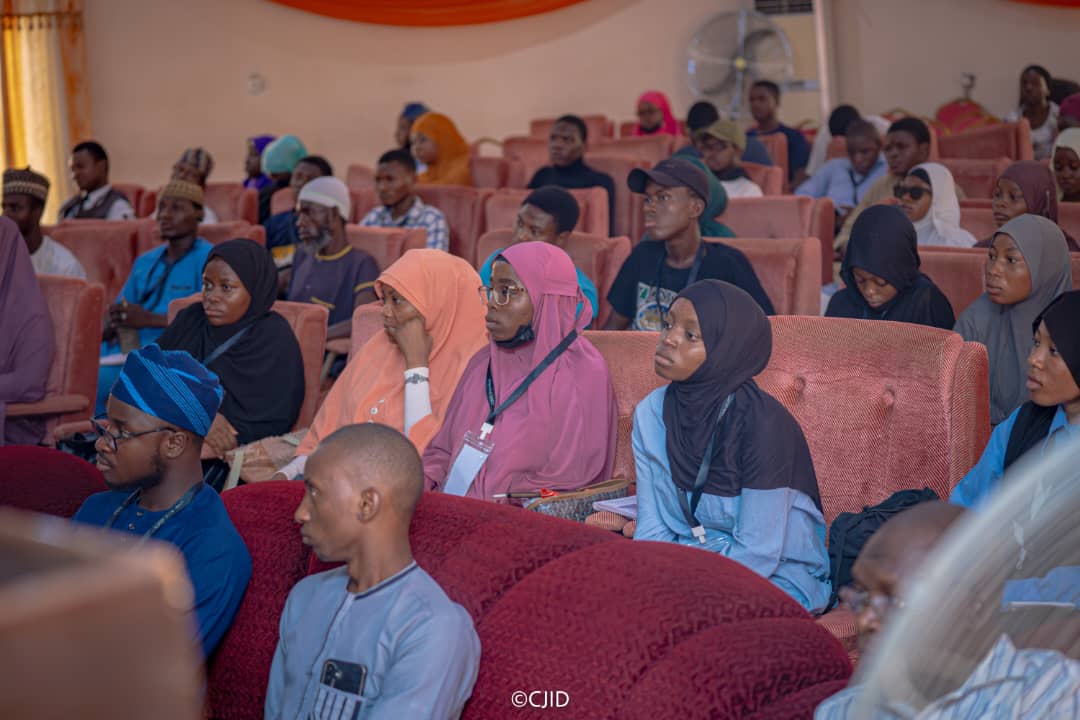
According to Jimoh Fatihu Ayomide, a 300-level Law student, “The training has inspired me and many of us to become more committed to ethical reporting and media sustainability. I commended CJID for organising the programme and providing young journalists with valuable learning opportunities.”
For Nasroh Ibrahim, a 200-level student of Nursing, the training improved her understanding of journalism responsibilities and practical reporting.
Nasroh said that she gained skills in news writing, interviewing, fact-checking, teamwork, identifying credible sources, and using modern media tools. She said that she planned to apply the knowledge by improving her writing and reporting skills and engaging more in campus journalism activities.
“It would be of great advantage to us if this kind of training are organised more often to update our existing knowledge and equip us with more tools,” she opined.
Another participant, Abdullah Shero Abass, a 200-level student of Criminology described all the topics as impactful and beneficial, he explained that all the sessions resonated deeply with him because of his personal experiences as a campus journalist. The participant revealed that he had previously faced attacks due to reports they published while exposing wrongdoing within the school system.
“The training organized by the CJID provided valuable insights and practical tips on how campus journalists can protect themselves, manage risks, and safely navigate sensitive issues while carrying out their journalistic responsibilities,” he stated.
“It’s a Capacity Building Training” — CJID says
While speaking with this reporter, the project officer of the CJID, Osaruonamen Ibizugbe, explained that the main aim of projecting the program to campus journalists is to build the capacity of the young journalists with the skills and necessary tools that they need to tell stories ethically, stories around social issues and the issues that affect students on campus.
She further explained that the next project is basically a learning platform for young journalists in order to identify campus journalists who have potential, then support them with mentorship and other resources for them to excel when they get into the mainstream media.
“It is very commendable that campus journalists from UDUS invested in building their capacity and in dominating the media space, two to three years from now, we are already looking out for the students of UDUS. Students here are winning the National and Global awards and it is very impressive as we encourage them to do more,” she said.
Speaking with the Deputy Director, Journalism Program at CJID, Mrs. Busola Ajibola told this reporter that student journalists play important roles in highlighting issues affecting students.
“However, such reports are sometimes misunderstood by school authorities as attempts to tarnish the institution’s image,” she explained.
According to her, the purpose of the training is to guide young journalists on how to report these issues ethically, accurately, and in an evidence-based manner.
She also stressed the importance of verification, fairness, and professionalism in campus reporting so that stories are seen as credible and in the public interest.
While addressing fears faced by student journalists, Mrs. Busola advised them to always prioritize their safety and education, noting that no story is worth risking their lives or studentship.
“Whenever a story may place a student journalist in danger, organizations like the Centre for Journalism Innovation and Development (CJID) can support by assigning mainstream journalists to handle such sensitive investigations,” she added.
“Participants are Exposed to Experienced Media Professionals” — NACJ
The President of the National Association of Campus Journalists (NACJ-UDUS), Muheeb Mashood explained that the CJID training aimed to equip campus journalists with practical and ethical journalism skills, including multimedia storytelling, gender-sensitive reporting, fact-checking, and safety practices.
He said that the programme exposed participants to experienced media professionals, helping to broaden their understanding of journalism.
He emphasized the importance of campus journalism in helping students apply the knowledge gained from the training and shared how similar opportunities shaped his own journalism career and achievements.
Muheeb also stressed the need for accuracy, truth, and balance in reporting while encouraging participants to remain committed to producing impactful stories that contribute positively to the society.
Muheeb said: “My administration has focused on creating opportunities and professional exposure for student journalists.”
Photo Credit: CJID