

By Shero Abbas
For months, students of Usmanu Danfodiyo University, Sokoto (UDUS) have been grappling with a steady and troubling rise in the price of sachet water, popularly known as “pure water.” What was once considered the most affordable and accessible source of drinking water on campus is gradually slipping out of reach for many.
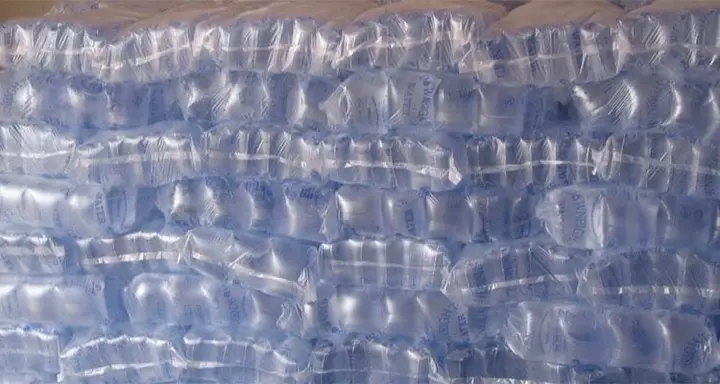
The increase has been sharp and, for students, largely unexpected. A bag of sachet water that previously sold for N250 now goes for between N350 and N400, while a single sachet, once sold for as low as N20 or N30, is now priced at N50 in many parts of the campus. The shift has disrupted daily routines, strained limited student budgets, and forced many to seek alternatives that may not always be safe.
For students already navigating the financial pressures of university life, the hike has become more than just an inconvenience, it is a daily struggle.
Usman Ibn Aliyu, a 100-level student of Shari’a Studies, says the increase has fundamentally changed how he accesses drinking water. “Every week, I used to buy a bag of water when it was N250, It was something I could plan for. But now that it’s N400, I’ve stopped buying it entirely. Even buying a single sachet feels expensive. I now prefer drinking tap water.” he said.
For Usman, the decision was not easy. Like many students, he relied on sachet water not just for convenience but for perceived safety. Yet, rising costs have left him with little choice.
Water as Survival in a Harsh Climate
In Sokoto, where temperatures can soar to extreme levels, access to clean drinking water is not optional, it’s essential. The intense heat that defines the region makes hydration a constant necessity, especially for students attending lectures, moving across campus, and living in often crowded hostels.
Abdullahi Nuradeen, a 500-level Forestry student, describes water as nothing short of a “lifeline” in the UDUS environment. For him, the price hike is both shocking and deeply concerning.
“I thought it was a joke the first time I bought a sachet of water for N50, I couldn’t believe it had reached that level. What really pained me was that this started during Ramadan. I was hoping that after Ramadan, the price would come down, but up till now, nothing has changed,” he recalled.
Nuradeen explains that cold sachet water is used to provide some relief from the relentless heat. Like many others, he often bought chilled sachets throughout the day to stay cool and hydrated. Now, even that small comfort is becoming unaffordable.
“In this kind of weather, water is not something you can compromise on. But the way things are going, it feels like the people selling it don’t consider how important it is to us,” he added.
From Choice to Necessity
For a growing number of students, drinking sachet water has moved from being a routine habit to a difficult decision—and in many cases, one they can no longer afford to make.
Abdulsomad Saidu, a 200-level student of Shari’a Studies, shares his living space with five brothers. Together, they once relied heavily on sachet water, buying in bulk to meet their weekly needs.
“We used to buy three bags of water every week when it was N250, that was manageable for us. But now, we can’t afford even one bag, the price has forced us to stop completely.”
The adjustment has not been easy. According to Abdulsomad, they had now reverted to using tap water, despite concerns about its reliability and safety.
“We now fetch water from nearby taps because sachet water is no longer for students like us,” he said.
Usman echoes a similar experience. He recalls consuming up to five sachets of water daily, especially during hot periods.
“Back then, N50 could get you multiple sachets, sometimes even more, depending on where you bought it. Now, N50 is just one sachet. I can’t keep up with that, so I’ve switched to tap water,” Usman said.
For many students, the transition has been reluctant and, at times, uncomfortable. Yet, it has become a necessary adjustment in the face of rising costs.
Health vs Survival
Beyond convenience and comfort, the rising cost of sachet water is raising concerns about student health. As more students turn to alternative water sources, questions about safety and hygiene are becoming increasingly urgent.
Abubakar Shehu, a 200-level student of Information and Communication Engineering, says the situation has forced him to adopt measures he never imagined he would rely on during his university years.
“When I can’t afford a bag of water, I fetch water from a nearby well, and then I boil the water and store it in a container so I can be drinking from it anytime I’m feeling thirsty,” he said.
Abubakar lives in a hostel where access to tap water is inconsistent, leaving him with limited options. “In my area, there’s no reliable tap water. The well is the closest source, and this is what we were used to growing up, but it’s not what I expected here.”
While boiling water reduces some risks, it does not fully eliminate concerns about contamination. Still, for students like Abubakar, the choice is less about preference and more about survival.
“When something as basic as water becomes expensive, you don’t think too much about comfort or quality anymore,” he added.
Vendors Cite Rising Costs
Vendors across the campus insist that the price hike is not driven by profit alone but by rising operational costs, and hike in price of fuel.
Usama Bashiru, a sachet water seller in the 80K area, explains that the increase is largely a reflection of broader economic pressures. “We don’t just wake up and increase prices, the cost of fuel has gone up, and that affects everything. We also buy ice blocks to keep the water cold, and those prices have increased too.”
According to him, the cost of purchasing sachet water from factories has also risen significantly, leaving vendors with little choice but to adjust their prices. “The factories have increased their rates, and we have to add a small profit to survive,” he explained.
Producers Defend Price Adjustment
Water producers share a similar perspective, pointing to systemic challenges affecting production. A representative of Acada UDUS, one of the sachet water producers on campus, said the decision to increase prices was not taken lightly and was influenced by factors beyond their control.
“We are not the only producers here, and the decision was collective. It’s something that came from higher authorities within the production chain.” The representative highlighted rising costs of diesel, electricity, packaging materials, and transportation as key drivers of the price increase.
While acknowledging the impact on students, the producer expressed optimism that the situation may improve.
“We understand that students are struggling, and we sympathize with them. We also believed that with time, prices will stabilize and hopefully come down.”
“The management body also needs to take necessary steps against the vendors because the price at which they get the water from the factory is very cheap. We currently sell a bag of water at N300; it was previously N250, but due to the hike in material costs, we added N50. However, vendors sell it at N400 or even N500 in some places,” Acada UDUS pleaded.
Mounting Pressure on Students
Available data supports the concerns raised by both vendors and producers. As of March 2026, sachet water prices in Sokoto and surrounding areas have risen significantly due to increased production costs, driven by fuel price hikes, unreliable electricity supply, and higher material expenses. Bags of sachet water are now frequently sold for over N400, marking a substantial increase from previous rates. For students, however, the implications go beyond statistics.
The situation raises broader questions about access to essential services within the university environment. With limited alternatives and minimal regulation of prices, students are left to navigate the crisis largely on their own.
For many students in UDUS, the hope is that authorities, whether within the university or at a broader level—will intervene to ease the burden. Until then, students continue to adapt in whatever ways they can. From rationing sachets to boiling well water, the strategies may differ, but the underlying reality remains the same, a basic necessity has become increasingly difficult to afford.